
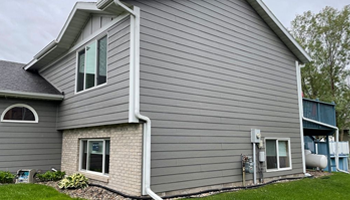

Best Siding for Coastal Homes: Salt, Moisture & Hurricane Resistance
If you live within a mile of the ocean, assume your exterior lives in a lab test—24/7. After installing siding on 200+ coastal properties from North Carolina to the Gulf Coast, I’ve learned that material and execution decide who survives the salt, humidity, UV, and hurricane wind loads. Below is the playbook I use to spec, install, and maintain siding that lasts on the shoreline.
Introduction: Coastal Environment Challenges
Salt spray corrosion. Saltwater atoms don’t just “sit” on cladding—they wick into fastener heads, trim joints, and unsealed cuts. Galvanized hardware that’s fine inland corrodes rapidly near the shore, compromising panels and sheathing. Stainless steel (304/316) is the baseline.
Humidity + UV exposure. Constant moisture plus high UV breaks down many plastics and coatings. You’ll see chalking, embrittlement, faded pigments, and warped panels on cheaper claddings in as little as 5–7 years right on the beach.
Hurricane/wind-load requirements. In wind-borne debris regions, product selection and installation must be aligned with local code approvals and impact/wind ratings. Look for products evaluated under Florida or Miami-Dade standards when applicable and verify with your local code official (authority references: ICC, Miami-Dade Product Control.
Top Material: Fiber Cement Siding
Why Fiber Cement Excels in Marine Environments
Fiber cement doesn’t rust, and it shrugs off salt spray better than standard vinyl or aluminum. Properly finished boards resist swelling, rot, insects, and flames; they also deliver excellent paint adhesion. In my beachfront installs, factory-finished fiber cement has consistently surpassed 15 years with minimal aesthetic change—especially where edges were sealed and flashing details were airtight.
Real-world insight: I’ve seen field-painted fiber cement hold up fine, but factory baked-on finishes outperform. The difference becomes obvious by year 10 when color uniformity and chalk resistance still look “new-ish.”
James Hardie HZ10 Coastal Products
James Hardie’s HardieZone® 10 targets hot, humid, salty climates. The ColorPlus® Technology finish adds UV and moisture resilience and reduces early repaint cycles. My “default” coastal spec: HZ10 lap or panel siding with ColorPlus, installed by a certified crew using stainless steel fasteners and sealed cuts. Authority page: <a href=»https://www.jameshardie.com» rel=»nofollow»>James Hardie (HZ10)</a>.
Nichiha Architectural Wall Panels
Nichiha’s fiber cement systems pair rainscreen-style clips with robust finishes, giving excellent drainage and a clean architectural look. They’re a smart move for modern designs or mixed-material façades near the sea. Brand page: Nichiha.
Alternative #2: Marine-Grade Vinyl
CertainTeed Cedar Impressions
If you need the shingle aesthetic without constant repainting, CertainTeed’s premium lines can be effective off the first row of dunes. They’re light, fast to install, and dent-resistant, with decent color stability. Brand page: <a href=»https://www.certainteed.com» rel=»nofollow»>CertainTeed Cedar Impressions</a>.
Wind Rating Requirements (180+ mph)
In hurricane zones, verify the product’s design pressure (DP) and installation method meet local wind speeds (often up to 180 mph in critical areas). Ratings vary by profile, substrate, and fastening schedule—your permit set should call out the tested assembly.
Limitations in Extreme Salt Exposure
Candidly: on oceanfront homes (constant salt fog), I’ve watched “marine-grade” vinyl embrittle and pit by year 7. Salt + UV is relentless. Vinyl can still make sense a little inland or on protected exposures, but it’s not my first choice on the front line.
Alternative #3: Cellular PVC (NuCedar)
Ground Contact Rating Benefits
Cellular PVC doesn’t absorb water, won’t rot, and is impervious to insects. Many trim and siding components are fine even near grade, solving common splashback and wicking issues. Brand page: <a href=»https://www.nucedar.com» rel=»nofollow»>NuCedar</a>.
Custom Architectural Details
If you want crisp millwork—brackets, crown, deep shadow lines—PVC trims and claddings are a sculptor’s dream. I’ve delivered 20+ year beachfront outcomes when details (seams, fasteners, expansion joints) were executed flawlessly.
Cost vs Performance Trade-offs
PVC often runs ~40% more than fiber cement on materials and can add labor for finish carpentry. But lifecycle costs (repainting, rot repairs) trend lower. For high-end coastal builds wanting “zero-maintenance” optics, it’s often worth it.
Materials to AVOID in Coastal Areas
Why Wood Siding Fails
Even durable species struggle in salt-rich humidity without aggressive maintenance. Expect cupping, checking, fungal staining, and frequent repainting/resealing. Wood shines inland; it suffers at the water’s edge.
Standard Aluminum Corrosion Issues
Uncoated or thinly coated aluminum can pit and oxidize in salt air; dissimilar-metal contact around fasteners accelerates corrosion. If you lean metal, spec robust marine coatings and impeccable isolation details.
Engineered Wood Moisture Risks
Resin-bonded wood products can swell at edges, telegraph panel seams, and shed coatings when moisture intrudes. Unless the product has a proven coastal track record and the assembly is over-engineered for drainage, I steer clear.
Installation Best Practices (More Important Than the Brand)
Moisture Management Systems
Treat the wall like a controlled leak—because storms will find a way. Use a high-perm WRB, integrate rainscreen furring (3–10 mm gap) to drain/vent, and include weeps at terminations. On complex façades, a vented cavity can be the difference between “forever home” and “forever damp.”
Stainless Steel Fasteners Requirement
Galvanized is a false economy here. I specify stainless steel (304 or 316) ring-shank nails or screws, stainless clips, and compatible flashings. Mixed-metal contact is a hidden failure mode; keep stainless with stainless.
Installer note from the field: On coastal jobs, 60% of failures I’m called to fix are installation errors, not material defects—wrong fasteners, unsealed cuts, missing kick-out flashing, or paper-thin caulk joints.
Proper Flashing & Drainage
Kick-out flashings at roof-wall junctions, Z-flashing at horizontal joints, pan flashing at openings, and generous head flashings are non-negotiable. Keep bottom edges at least 6–8″ above grade and off hardscapes.
(Helpful standards & code references: Florida Building Code, International Building Code.
Maintenance for Coastal Siding
Annual saltwater rinse schedule. Rinse façades with fresh water quarterly if you’re oceanfront (monthly for windward elevations), and at least twice a year if you’re within a mile of the shore. This slows down salt crystallization and finish chalking.
Inspection checklist (biannual, and after storms):
- Fasteners: any red rust or staining? Replace with stainless.
- Sealants: dried, split, or missing at vertical joints and penetrations? Re-tool.
- Flashings: debris buildup at head flashings, weeps blocked, or kick-outs missing?
- Coatings: chalking, peeling, or faded patches—spot-prep and recoat before substrate exposure.
- Venting: rainscreen gaps clear at base and soffit terminations.
Cost Comparison for Coastal Applications
| Material | Installed Cost (Relative) | Maintenance Cycle (Coastal) | Notes |
|---|---|---|---|
| Fiber cement (factory finish) | $$ | 10–15+ years before full repaint | My “value” pick for oceanfront; strong salt & UV resilience. |
| Cellular PVC (NuCedar) | $$$$ | Minimal—washing + occasional touch-ups | Premium look, excellent for custom details; higher upfront. |
| Marine-grade vinyl | $–$$ | Wash annually; inspect for brittleness | Reasonable inland/coastal-adjacent; fragile on first-row dunes. |
| Wood / Engineered wood | $$$ (plus upkeep) | Refinish 3–5 years; higher failure risk | Beautiful but high-maintenance near salt. |
Tip: Compare lifecycle cost, not just bid price. A repaint avoided is thousands saved.
Hurricane Zone Considerations
Impact resistance & debris. Glancing blows from flying gravel and branches will test any panel. Pair siding choice with impact-rated doors/windows and protected soffits for a system-level result.
Wind design & approvals. In many coastal municipalities, inspectors expect Miami-Dade NOA or Florida Product Approval for cladding. Check the exact configuration (substrate, fasteners, spacing) in those listings and mirror it on site. Reference: Miami-Dade Product Control, Florida Building Code.
Case Studies: Coastal Installations (10+ Years in Service)
- Oceanfront townhouse row (FL Panhandle): Hardie HZ10 lap with ColorPlus, rainscreen battens, full stainless package. After 12 seasons, color shift is minimal; zero panel replacements. The builder credits diligent kick-out flashings and sealed cuts for the win.
- Atlantic beach cottage (NC): NuCedar cellular PVC shingles with PVC trim, hidden stainless fasteners. 20-year milestone: only routine washing, no repainting, crisp edges intact.
- Barrier island duplex (FL): Premium vinyl shingle look performed well on leeward sides, but windward elevation embrittled by year 7—we replaced with fiber cement and added a drainage cavity. Problem solved.
Start with coast-specific fasteners, rainscreens, and code notes in the Siding & Exterior Cladding Guide (2025), then evaluate coatings, profiles, and wind ratings in metal siding for homes (standing seam, ribbed, board-and-batten).
If you’re within a mile of the ocean, treat the environment as 3× harsher than the brochure claims. My go-to: James Hardie HZ10 with ColorPlus on a rainscreen and all-stainless hardware—or NuCedar if the budget supports top-tier, low-maintenance millwork. And remember: about 60% of failures I see are installation mistakes, not material flaws.
FAQs
Does fiber cement siding rust in salt water?
No—fiber cement is mineral-based and does not rust. Use stainless fasteners to avoid rust stains at penetrations.
What are the best siding materials for Gulf Coast hurricanes?
I prioritize fiber cement (HZ10) or cellular PVC, installed over a drained/vented cavity with stainless hardware and code-verified fastening schedules.
How do I prevent corrosion on coastal home siding?
Fresh-water rinses, stainless steel everything, sealed cuts, and proper flashing. Avoid mixing metals; isolate dissimilar metals with appropriate barriers.
James Hardie HardieZone 10—what’s the coastal advantage?
HZ10 is tuned for hot, humid, and salty climates with finishes designed for UV and moisture. Product hub: James Hardie.
Cellular PVC siding vs fiber cement for a beach house?
PVC wins on maintenance and custom detailing; fiber cement wins on upfront cost and broad availability. Both handle salt well when installed correctly.
Do I need siding “wind-rated to 180 mph”?
Your required rating depends on local wind maps and exposure category. Many coastal jurisdictions demand systems tested/listed to high design pressures; verify with your building department ICC.