

Best Window Brands by Climate Zone: Efficiency, Cost, Security & Real-World Tradeoffs
When homeowners compare casement vs double-hung windows, they’re really choosing between two opening mechanics that behave very differently in the real world. In broad strokes, double-hung windows remain the American default (roughly 60% share), while casements have grown to about 25% thanks to their energy performance and clean, modern lines. Functionally, a double-hung slides like an elevator (two sashes travel up/down); a casement swings like a door (side-hinged, cranks or pushes open). That one difference drives everything: air leakage, ventilation, cost, cleaning, security, and code compliance. Get it right, and your home will feel tighter, quieter, and easier to live with for decades.
Double-Hung Windows: The American Classic
Design and Operation
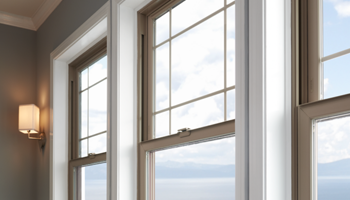
A double-hung has two operable sashes that move vertically. Modern units typically offer tilt-in cleaning, so you can clean both sides from the inside—gold for second floors. Sightlines skew traditional; muntins, rails, and stiles create that familiar, symmetrical look many buyers expect.
Historical Context and Architecture
Double-hung windows have been standard in American homes since the 1800s and look “right” in Colonial, Craftsman, and Victorian styles. Appraisers and buyers in traditional neighborhoods often assume double-hung unless the house was designed modern from day one.
Operating Mechanism and Hardware
Inside the jambs, you’ll find balance systems (spiral, constant-force, or block-and-tackle) that counterweight the sash. Locks clamp the meeting rail between sashes. Weatherstripping relies on sliding contact—good, but not compression-tight—so sealing depends on precise fit and ongoing maintenance.
Casement Windows: The European Efficiency Leader
Design and Operation
A casement is side-hinged and swings outward using a crank or push-out operator. Opened fully, the sash clears the frame, leaving the entire aperture for airflow. The feel is minimalist: a large glass field with slim frames, especially in fiberglass or aluminum-clad lines.
Modern Popularity Growth
Casements are popular because they seal more tightly and suit contemporary and modern farmhouse aesthetics. Their performance edge shows up in comfort, quieter rooms, and lower energy bills—especially in windy or cold climates.
Operating Mechanism and Hardware
The sash engages multi-point locks that pull the sash into a compression seal. Hinges carry more load than on a slider, so quality manufacturing matters. Operators (the crank gearsets) make opening/closing smooth—until wear sets in (we’ll cover that under maintenance).
Energy Efficiency Comparison: The Critical Difference
Air Leakage Ratings
Casement windows routinely test at 0.01–0.10 cfm/ft² of air leakage. Double-hung windows often fall in the 0.10–0.30 cfm/ft² range due to the meeting rail and sliding contact. That means 50–70% better air tightness for casements in many product lines.
Field note: In one Minnesota project I installed both types in the same house (identical glass packages, U-0.27). Our blower-door test measured 0.06 cfm/ft² for the casements and 0.23 cfm/ft² for the double-hung. Thermal imaging in winter showed distinct cold streaks along double-hung meeting rails while casements stayed uniform. The delta translated to roughly $40–$60/year per window in heating for that climate.
U-Factor Performance
With similar glass, casements often post U-factors ~0.02–0.05 lower than double-hung because their compression seals reduce convective loss at the frame and sash interfaces. Sliding systems have more leakage pathways and are more sensitive to small misalignments over time.
Real-World Energy Savings
Homeowners typically see $25–$75 per window per year in heating/cooling differences favoring casements, with the biggest wins in cold and windy zones. That’s not magic—just physics: fewer leakage paths + tighter locks = less conditioned air out, less draft in.
Want to sanity-check the physics? See educational material from manufacturers and federal guidance on window performance Energy.gov: Windows, This Old House.
Ventilation and Airflow Characteristics
Casement: Directional Airflow Control
Because a casement opens like a sail, you can “catch” the breeze and direct it into the room. With the sash fully open, you’re using nearly 100% of the rough opening for ventilation. This is ideal for natural cooling strategies and coastal or cross-breeze layouts.
Double-Hung: Flexible Partial Opening
Double-hung lets you open the top, bottom, or both to create a stack effect (warm air out the top, cool in the bottom). The tradeoff is capacity: at any moment you’re using about 50% of the opening for airflow. On the flip side, partial openings can feel more secure on ground floors or kids’ rooms.
Which is better for natural cooling? For maximum airflow and breeze capture, casements win. For finer control and child-safety patterns (top-only opening), double-hung has an edge.
Cost Comparison Analysis
Purchase Price
Installed pricing varies by region, size, glazing, and manufacturer, but as a baseline:
- Double-hung: $400–$1,200 installed
- Casement: $450–$1,400 installed (often +10–20% premium)
Why Casements Cost More
- More complex hardware: heavy-duty hinges and operators
- Stiffer frames: to resist sash sag and maintain seal compression
- Enhanced weatherstripping: multi-point locking and gaskets add parts and labor
Long-Term Value and Payback
In cold climates, the energy delta often pays back the premium in ~8–12 years. In moderate climates, savings are real but slower; consider security and ventilation benefits to justify the upgrade.
Cleaning and Maintenance
Double-Hung Advantages
The tilt-in feature lets you clean both glass surfaces from inside—the decisive convenience win. On second floors, this is a game-changer for routine maintenance.
Real-world note: A client with all casements on the second floor told me she regretted that choice the first spring cleaning—ladder time for every window. After a remodel, we went back to double-hung upstairs and kept casements on the main floor.
Casement Challenges
Casement exteriors are best cleaned from outside. Operators and hinges also wear over time:
- Typical operator life: 12–18 years, premium lines often 15–20
- Replacement operator parts: $150–$300 per window, plus labor
- Periodic lubrication and hinge tightening keep things smooth
Installer tip from the field: Quality matters. I’ve replaced dozens of low-end crank operators that failed under a decade, while premium units kept cranking for nearly two.
Aesthetics and Architectural Compatibility
Double-Hung: Traditional Elegance
In Colonial, Craftsman, and Victorian homes, double-hung windows maintain historic character with vertical proportions and divided-lite options. They tend to blend in established neighborhoods and can protect resale value where buyers expect tradition.
Field note: I once listed a traditional house retrofitted with all casements in a historic district—feedback repeatedly called them “too modern.” Same buyer pool would have embraced double-hung.
Casement: Modern Clean Lines
Casements bring unobstructed glass when open and a sleek, European vibe closed. They pair well with modern, Scandinavian, and contemporary designs—and increasingly, modern farmhouse.
Home Value and Resale Considerations
Match the window type to the architecture and neighborhood. Where buyers prize performance and modern design, casements can differentiate. Where tradition rules, double-hung feels “correct” and may sell faster.
Security Considerations
Casement Security Advantages
Casements use hooked, multi-point locks embedded in the frame. When shut, the sash can’t be pried easily; the hardware literally draws it tighter. Many insurers consider casements hardest to breach among operable types.
On-site experience: I inspected an attempted break-in where the intruder gave up on a casement (no purchase point to pry). Next house, a failed double-hung lock let a screwdriver lift the sash in seconds.
Double-Hung Vulnerabilities
If locks or sash stops aren’t robust—or if the frame has play—a double-hung can be forcibly lifted. Upgrade to quality locks and consider auxiliary sash locks and security film. Proper installation (square, plumb, shimmed) is non-negotiable.
Insurance angle: Some carriers look favorably on multi-point locking systems and laminated glass; ask your agent how window selections affect premiums or credits.
Screen and Storm Window Options
- Double-hung: Interior or exterior screens; traditional homes may use full-length storm panels seasonally without blocking operation.
- Casement: Interior screens only; they preserve the exterior look but can be in the way when reaching hardware or wiping sills.
Consider how you’ll interact with screens (pets, kids, frequent removal) before picking a type.
Use Case Recommendations
When Double-Hung Is the Best Choice
- Historic or traditional homes where authenticity matters
- Upper floors where interior cleaning is essential
- Bedrooms requiring easy egress with flexible opening strategies
- Street-facing elevations in classic neighborhoods
- Homes needing frequent screen access (repairs, pets)
When Casement Is the Best Choice
- Maximum energy efficiency is the priority
- Modern/contemporary design language
- Ground floor placements (easy exterior access for cleaning)
- Rooms needing directed ventilation (kitchens, baths)
- Security-conscious homeowners wanting multi-point locking
Hybrid Approach: Using Both Types
You don’t have to choose just one. My go-to layout: double-hung on the front elevation for curb appeal; casements on the sides/rear for performance. Upstairs, I typically keep double-hung for easy cleaning. Clients consistently report this “best of both worlds” mix feels right day to day.
Common Problems and Solutions
Double-Hung Issues
- Balance failure: Sashes won’t stay up.
Fix: Replace balances; check sash weight vs rating. - Sash warping/sticking: Seasonal swelling or paint bridging.
Fix: Plane binding edges; re-finish; verify reveal. - Meeting rail leakage/drafts:
Fix: Upgrade weatherstripping; tune latch tension; ensure sill dam is intact.
Casement Issues
- Crank mechanism failure or stripping:
Fix: Replace operator; lubricate gears/arms annually. - Hinge wear and sash sag:
Fix: Tighten/replace hinges; install adjustable hinges on larger sashes; verify frame shimming. - Weatherstrip compression fatigue:
Fix: Replace gaskets; adjust lock strikes to restore compression.
Budget reality: Plan a maintenance line item for hardware over the life of the window—especially casements with large, heavy sashes.
Top Brand Recommendations
Best Double-Hung Windows
- Andersen 400 Series — Best overall: Reliable balance systems and strong weatherstripping.
- Marvin Ultimate — Premium choice: Beautiful wood interiors, aluminum-clad exteriors, custom detailing.
Best Casement Windows
- Andersen A-Series — Top performance: Excellent compression seals and multi-point locks.
- Marvin Signature — Luxury option: Superb hardware, large sizes, clean profiles.
Installation Considerations
- Rough opening: Verify plumb, level, square; casements are less forgiving of twist.
- Outswing clearance: Casements need 8–12 inches of clear swing outside—check landscaping, walkways, and deck rails.
Installer lesson learned: I’ve seen a $6,000 casement order that couldn’t fully open because a deck rail sat in the swing path; the fix cost $1,500 in deck mods. - Weather exposure: On windward facades, casements shine (better sealing under wind load).
- Code (egress): Bedrooms require minimum clear openings. Double-hung often meet egress more easily at a given rough opening; large casements can meet code but may need a wider unit.
Field note: I’ve had to upsize casements to hit egress—add that to your budget if bedrooms are in play.
Window style should follow climate—lock specs and targets first in the Windows & Doors hub, then match brands and glass packages to your region using the climate-based window brands guide.
Final Recommendation Framework
Use this quick decision matrix (1 = low priority/poor, 5 = high priority/excellent). Score each type for your project:
| Priority / Criterion | Double-Hung | Casement |
|---|---|---|
| Energy efficiency (air leakage) | 3 | 5 |
| U-factor (frame/sash sealing) | 3 | 4–5 |
| Natural ventilation capacity | 3 | 5 |
| Cleaning convenience (upper floors) | 5 | 2 |
| Security (resistance to prying) | 3 | 5 |
| Traditional curb appeal | 5 | 3 |
| Modern aesthetic | 2 | 5 |
| Installed cost | 5 | 4 |
| Long-term maintenance risk | 4 | 3 |
| Egress flexibility (typical sizes) | 4 | 3 |
How to decide:
- Climate & exposure: Colder/windier = casement advantage.
- Architecture: Traditional streetscapes favor double-hung (front elevation).
- Floor level: Second floor (and higher) leans double-hung for tilt-in cleaning.
- Security: If security matters, casement’s multi-point locks are hard to beat.
- Budget vs payback: Price delta is real; in cold climates, casements often pay back in a decade.
FAQs
Are casement windows more energy efficient than double-hung?
Yes, typically. Casements usually post lower air leakage (0.01–0.10 cfm/ft²) vs 0.10–0.30 for many double-hung models and can show 0.02–0.05 lower U-factors with similar glass. In my testing, casements cut leakage by ~75% and saved $40–$60 per window per year in a cold climate.
Why do casement windows cost more?
They use heavier hardware (hinges/operators), stiffer frames, and multi-point locking with better weatherstripping. That complexity and the tighter tolerances add material and labor.
Are double-hung windows easier to clean than casement?
For upper floors, absolutely. Tilt-in sashes mean no ladder. With casements, you’ll typically clean the exterior from outside unless you’re on a ground floor or have special reach tools.
What’s the most secure window type for a home?
Among standard operables, casements are often hardest to pry thanks to hooked multi-point locks and a sash that pulls into the frame. Upgrading glass (laminated/tempered) helps either type.
Casement vs double-hung for bedroom egress?
Check local code. Double-hung often meet egress at smaller rough openings because the combined opening of both sashes can qualify. Casements can meet egress but may need larger sizes.
Which window type is best for a historic home?
If architectural authenticity and neighborhood fit matter, double-hung usually wins. Consider casements on rear elevations if you want performance without changing the street view.
Do casement windows leak more in storms?
No—properly installed casements typically leak less because wind pressure actually tightens the compression seal. Installation quality (flashing, shims, plumb/square) is crucial for either type.
Common casement crank problems?
Operator wear (sticking, stripped gears) after 12–18 years is typical. Lubricate annually, don’t force sticky cranks, and budget $150–$300 per operator when replacements are due.
If you want maximum efficiency, breeze capture, and security, choose casements—especially on sides/rear and ground floors. If you value easy cleaning, traditional curb appeal, and egress flexibility, double-hung still rules, particularly upstairs and on front elevations. Many homes benefit from a hybrid: double-hung facing the street, casements where performance matters most. That’s the balance I recommend—and in practice, it keeps energy bills down, curb appeal up, and day-to-day living simple.