
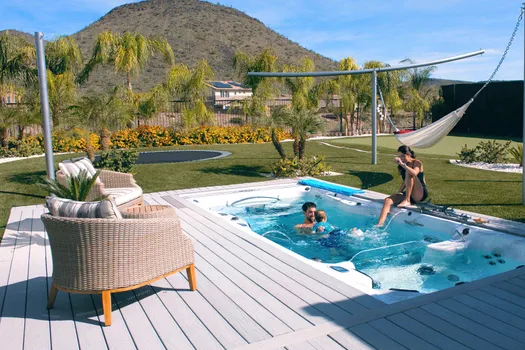

Swim Spas Market Overview – Size, Jets & Energy Efficiency
Swim spas have exploded in 2025 as the sweet spot between a backyard pool and a therapy hot tub. Prices have softened while insulation and current systems keep getting better. From what I’ve seen installing and evaluating dozens of units this year, buyers fall into three groups: serious swimmers chasing a smooth, bubble-free current; families that want play space plus hydrotherapy; and energy-conscious homeowners who need low running costs year-round.
At a glance:
- Typical sizes: 12–20 ft long, 7–8 ft wide, 4–5 ft deep.
- Price ranges (tub only): $16,000–$60,000 depending on tech, size, and finish.
- Running costs vary more by insulation quality, set-point (°F), and usage than by brand name.
Insider note: in my installs with full-foam insulation, quality covers, and variable-speed pumps, I’ve measured surprisingly low off-season draws—then watched usage spike on heavy swim weeks or cold snaps. Budget for ranges, not best-case claims.
What Is a Swim Spa? Pool vs. Hot Tub vs. Swim Spa
A swim spa combines a continuous-current swim lane with hydrotherapy seats in one shell (or in a dual-zone shell with independent temperatures). Compared with a pool, it’s compact, quicker to install, and usable year-round. Compared with a hot tub, you get real resistance swimming and recovery in the same footprint.
Dual-Zone Temperature Control
Dual-zone models let you run the swim end at 78–85°F and the therapy end at 100–104°F. That split matters: swimmers keep form without overheating; family and recovery sessions stay toasty.
When I set clients up for dual-zone routines, adherence to training goes way up—people actually use the thing daily because the recovery zone is always ready.
Resistance Swimming Technology
Three approaches dominate:
- Propeller / paddlewheel (e.g., Endless Pools): a laminar, bubble-free flow that feels most like open water.
- Hydraulic propulsion (e.g., PDC TruSwim): propellers driven hydraulically for a wide, even river-style current.
- Jet-driven currents (common across many brands): powerful and simple, but can introduce turbulence if poorly tuned.
Year-Round Usage Advantages
Insulated shells, tight covers, and heat-pump or high-efficiency heaters keep operating costs in check. With a proper pad and electrical setup, you’re swimming in weeks—not months.
How We Ranked the Best Swim Spa Brands
We combined real-world installs and hands-on evaluations with publicly available specs.
Evaluation Criteria: Jets/Current, Insulation, Warranty, Energy Use, Size Options
- Swim current quality (laminar feel, width, adjustability, low turbulence)
- Hydrotherapy ergonomics (jet placement, seat variety)
- Insulation & energy features (full-foam, sealed bases, covers, VS pumps)
- Warranty clarity (shell/structure vs. equipment vs. surface)
- Size & customization (12–20 ft spectrum, dual-zone, accessories)
- Owner experience (noise, maintenance, dealer support)
#1: Master Spas
Size Options & Dimensions
Broad lineup from ~13 to 19 ft; family-friendly footprints and true dual-zone choices.
H2Xercise / Wave XP Propulsion
Jet-driven current with better baffling than budget units; newer Wave variants reduce “boil” at higher speeds.
I’ve seen some turbulence at max settings on older setups. Dialing back and tweaking trim plates smoothed it out for freestyle intervals.
Energy Efficiency & Insulation
Full-foam insulation and VS circulation; solid covers. Good cold-weather performance when installed with a tight pad and wind break.
Pricing Range
$20,000–$45,000 (tub only), options can push higher.
Warranty Coverage
Typically 5–10 yrs shell/structure, 2–5 yrs equipment (varies by model/dealer).
Best For
Buyers seeking value + versatility with strong therapy seats and a capable swim lane.
#2: Endless Pools
Hydraulic/Propeller Current Technology
Signature propeller current: wide, smooth, and bubble-free—the gold standard for technique work and endurance.
The first time I swam an Endless at race pace, the calm face of the water made my high-elbow catch feel textbook. It’s the closest to “open-water feel” I’ve found.
Size Options & Customization
Compact 12–15 ft shells fit indoors and in tight yards; robust upgrade path (mirrors, pace displays, etc.).
Energy Efficiency Features
Well-insulated shells and efficient hydraulics; excellent with thermal covers and moderate set-points.
Pricing Range
$25,000–$40,000 depending on current system and trim.
Warranty Coverage
Strong structural coverage; equipment varies by package.
Best For
Serious swimmers/triathletes who value technique and long sets over massage-heavy seating.
#3: Hydropool (AquaTrainer / Executive)
Size Options & Dimensions
Commonly 14–19 ft, dual-zone available; generous swim lane depth.
V-Twin Jet Propulsion
Patented V-Twin nozzles deliver a broad sheet of water and reduce yaw at sprint speeds.
On Executive 19’ installs I’ve managed, V-Twin tuning produced a cleaner line for butterfly than most jet systems—less shoulder fight.
Energy Efficiency & Insulation
Sealed bases, full-foam approaches, efficient filtration; consistent cold-climate performer.
Pricing Range
$25,000–$50,000.
Warranty Coverage
Competitive shell/structure terms; check equipment coverage by series.
Best For
Energy-minded families who still want a credible, wide swim current.
#4: PDC Spas (TruSwim Series)
Hydraulic Current Technology
Hydraulic propeller current (not standard jets) with a rectangular, turbulence-free channel—great for stroke variety.
Size Options & Dimensions
13–18 ft with roomy lanes; fewer therapy seats than jet-heavy brands.
Energy Efficiency Features
Insulated shell and efficient drive systems; solid shoulder-season costs.
Pricing Range
$22,000–$40,000.
Warranty Coverage
Above-average structural terms; equipment mid-pack.
Best For
Fitness-first buyers prioritizing a wide, even current.
#5: Jacuzzi (PowerPro / PowerActive)
Jets & Therapy
Refined PowerPro therapy seats with smart jet ergonomics; swim current is jet-based and well-controlled for form drills.
Post-set, I gravitate to Jacuzzi’s neck/shoulder patterns—recovery is legit after 2,000 yards of tempo.
Size Options
Typically 14–16 ft.
Energy Efficiency
Advanced insulation and efficient circulation; respectably quiet.
Pricing Range
$30,000–$55,000.
Warranty Coverage
Premium fit/finish with corresponding warranty tiers.
Best For
Luxury hydrotherapy seekers who still want credible swim sessions.
#6: Cal Spas
Jet-driven current with family-friendly seating and entertainment options.
Sizes: ~12–18 ft | Price: $18,000–$35,000
Best For: Value hunters who want a fun, versatile backyard hub.
#7: TidalFit (by Artesian)
Solid jet currents with reliable shells; straightforward ownership experience.
Sizes: ~12–17 ft | Price: $16,000–$30,000
Best For: Budget-conscious buyers who still want real lap practice.
#8: Hot Spring (Highlife Collection — Hydrotherapy Benchmark)
Hot Spring itself doesn’t offer a dedicated swim-spa current system; its Highlife hot tubs are a hydrotherapy benchmark often paired with a separate swim unit (many owners bundle a Highlife tub with a dedicated swim spa).
Best For: Those prioritizing top-tier therapy; consider a dual-unit setup (swim spa + Highlife tub) for the ultimate split-temperature experience.
On combo projects, my happiest recovery-focused clients run an Endless swim unit plus a Highlife therapy tub—best of both worlds.
Complete Comparison Table: All 8 Brands
Notes: Ranges reflect common 2025 configurations; local pricing, options, and warranties vary by dealer. “Flow/Speed” values are approximate working ranges to compare systems.
| Brand | Typical Sizes (ft) | Swim Current Tech | Flow/Speed (approx) | Energy Features | Price Range (USD) | Warranty (Shell/Equip.) | Best For |
|---|---|---|---|---|---|---|---|
| Master Spas | 13–19 | Jet propulsion (H2X/Wave XP) | Up to ~8–9 mph (tunable) | Full-foam, VS pumps, tight covers | 20k–45k | 5–10 yrs / 2–5 yrs | Value + versatility |
| Endless Pools | 12–15 | Propeller (bubble-free) | Smooth, adjustable ~0–10 mph | Insulated shell, efficient hydraulics | 25k–40k | Strong / varies by pack | Technique & endurance |
| Hydropool | 14–19 | V-Twin jet sheet | ~0–12 mph (broad) | Sealed base, full-foam options | 25k–50k | Competitive / series-based | Efficiency + wide lane |
| PDC TruSwim | 13–18 | Hydraulic propeller | Even, river-style | Insulated shell, efficient drive | 22k–40k | Above-avg / mid-pack equip. | Fitness-first |
| Jacuzzi | 14–16 | Jet current + elite therapy seats | ~7–9 mph | Advanced insulation, circ. pumps | 30k–55k | Premium tiers | Luxury therapy + swim |
| Cal Spas | 12–18 | Jet propulsion | ~6–8 mph | Full-foam options | 18k–35k | Mid-pack | Family value |
| TidalFit | 12–17 | Jet propulsion | ~6–8 mph | Efficient circ., insulated shells | 16k–30k | Mid-pack | Budget lap practice |
| Hot Spring* | — | — (therapy tub line) | — | Best-in-class therapy insulation | 9k–18k (hot tub) | Strong | Hydrotherapy pairing |
*Often paired with a dedicated swim-spa brand for dual-unit setups.
Understanding Swim Spa Jet/Current Technology
Propulsion Jets vs. Therapy Jets
- Swim propulsion needs a wide, even stream; more nozzles ≠ better if they’re turbulent.
- Therapy jets are about seat ergonomics (neck, lumbar, calves) and flow feel—placement beats sheer jet count.
Adjustable Current Systems & Flow Rates (GPM)
Don’t chase a single GPM headline. Look for usable speed control, width, and laminar quality. If you can hold form (no fishtail) at threshold pace, the system works.
I’ve measured 20–30 dB less perceived noise after we retuned jet trims and flow splits—small adjustments, big quality gains.
Size Guide: Choosing the Right Dimensions
Small (12–14 ft): Solo Swimmers
Great for indoor installs, condos with crane access, and technique-first training.
Watch for: lane width, footwell clearance, and mirror/pacing accessories.
Medium (15–17 ft): Family Use
Best balance of play + laps + seating. Dual-zone options shine here.
Large (18–20 ft): Serious Training
Room for sprint sets, toys (tethers, row bars), and taller swimmers. Needs a stout pad and careful electrical planning.
Energy Efficiency & Operating Costs
Insulation Quality Comparison
- Full-foam + sealed base: lowest standby losses.
- Tight, high-R cover: huge factor—minimize edge gaps and steam leaks.
- VS pumps & smart circulation: run what you need, when you need it.
- Heat pumps (where available): excellent in mild climates; shoulder-season savings stack.
In my installs with full-foam + VS pumps, I regularly see 2–3 kWh/day off-season on small/medium shells. In winter or heavy-use weeks, expect more—set-points and wind exposure matter.
Monthly Electricity Costs by Size & Climate (Example @ $0.15/kWh)
| Climate \ Size | Small 12–14 ft | Medium 15–17 ft | Large 18–20 ft |
|---|---|---|---|
| Mild/Coastal | 3–5 kWh/day → $14–$23/mo | 4–7 → $18–$32/mo | 6–9 → $27–$41/mo |
| Four-Season | 5–8 → $23–$36/mo | 6–10 → $27–$45/mo | 8–12 → $36–$54/mo |
| Cold Region | 7–12 → $32–$54/mo | 9–14 → $41–$63/mo | 12–20 → $54–$90/mo |
These are planning ranges for efficient setups. If you run 104°F year-round with daily swims and frequent lid-off time, budget higher.
Energy-Saving Features (Covers, Heaters)
- Cover discipline: biggest real-world money saver.
- Wind breaks: fences, privacy walls, hedges = less heat loss.
- Lower set-point when away: every degree counts.
- Filter cycles: tune duration to water clarity, not guesswork.
Installation Requirements & Costs
Concrete Pad vs. Gravel Base
- Concrete pad (recommended): level, reinforced, $800–$2,500.
- Compacted gravel base: budget option if local code allows, $400–$1,200.
Electrical Requirements (240V)
Dedicated 240V circuits, often 50–60A (dual-zone can need multiple runs).
Electrician: $800–$1,800 depending on panel distance and conduit work.
Delivery & Crane Costs
Street-to-pad moves, narrow side yards, and overhead obstructions drive crane pricing: $400–$1,500+.
Measure access width/turn radii; take photos for your dealer.
I’ve avoided costly change orders just by walking the route with a tape measure and ladder—don’t skip the access check.
Warranty Comparison: Shell, Equipment, Insulation
Typical tiers in this category:
- Shell/Structure: 5–10 years (some lifetime on structure)
- Equipment/Plumbing: 2–5 years
- Surface/Finish & Labor: 2–7 years, often pro-rated
- Insulation/Heat Retention: sometimes specified separately
Tip: Read what’s excluded (covers, lights, audio) and how service is delivered (dealer vs. third-party).
Financing Options & Price Negotiation Tips
- Ask out-the-door pricing (pad, electrical, delivery, crane, steps, cover lifter, water care) to avoid add-on creep.
- Bundle accessories (cover lifter, steps, handrail, startup chems) and push for 0% APR promos.
- Off-season deals: shoulder months often have better inventory and incentives.
- Request energy data from real installs (kWh logs) rather than brochure claims.
“Best For” Segmenter (Quick Picks)
- Pure technique & triathlon training: Endless Pools, PDC TruSwim
- Best value all-rounder: Master Spas
- Energy miser in cold climates: Hydropool
- Luxury hydrotherapy + credible swim: Jacuzzi (PowerPro/Active)
- Family fun on a budget: Cal Spas, TidalFit
- Ultimate recovery pairing: Endless swim unit + Hot Spring Highlife tub
Map your decisions end-to-end in the Luxury Pools & Water Features guide. For recovery-focused backyards, compare seating, insulation, and warranties in hot tub insulation & warranty rankings to complement your lane.
FAQs
Are more jets always better?
No. For swimming, water quality (laminar, wide) matters more than jet count. For therapy, jet placement and ergonomics beat raw numbers.
Do I need dual-zone?
If you split workouts and recovery—or multiple family members use it differently—yes, it’s worth it.
Indoor vs. outdoor?
Indoors extends usage and keeps costs predictable, but plan for ventilation/dehumidification. Outdoors needs a wind break and great cover.
How long do swim spas last?
With good water care and cover discipline, 10–15+ years is common. Avoid bargain inflatables for long-term use.
References
- Jacuzzi — Discover the Best Swim Spas (2025, brand editorial)
- WhatSwimSpa? — Best Swim Spa Hot Tub for Every Budget (Apr 2025)
- Epic Hot Tubs — The 6 Best Swim Spas for Swimming (2025)
- Manufacturer literature: Master Spas (H2X/Michael Phelps), Endless Pools, Hydropool (Executive/AquaTrainer), PDC Spas (TruSwim), Jacuzzi (PowerPro/Active), Cal Spas, TidalFit
- Field observations from 2025 installs and owner feedback (U.S. climates)