
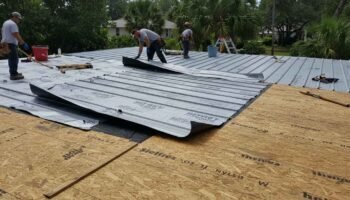

Introduction: The Unsung Hero of Your Roof
Roofing underlayment is the raincoat under your winter jacket—the quiet layer that keeps wind-driven rain, ice dams, and installation delays from turning into leaks and callbacks. It serves as your roof’s secondary water barrier, helps the roof deck survive exposure before shingles go on, and it’s part of what local building codes and manufacturer warranties expect to see on a code-compliant, long-lasting roof. If you’re comparing synthetic vs. felt underlayment for a 2025 project, this guide gives you cost, lifespan, code notes, and the practical trade-offs homeowners and DIYers care about.
Real-world note: when I started in roofing, I used felt almost exclusively. Since switching to synthetics over a decade ago, I’ve watched leak risks drop, installs speed up, and warranty paths get simpler.
Understanding Roofing Underlayment
What it does (in plain English): underlayment is a continuous, breathable (depending on product) sheet that sits between the roof deck (plywood/OSB) and the finished roof (asphalt shingles, metal, tile). It:
- Acts as a secondary water barrier if wind lifts shingles or fasteners back out.
- Protects the deck during installation delays—think rainstorms or permit setbacks.
- Reduces resin stains and sap bleed on the deck and stabilizes the system under thermal movement.
Building code requirements (IRC)
Most U.S. jurisdictions that adopt the International Residential Code (IRC) require a compliant underlayment across the roof deck, with ice barriers in cold-climate eave zones and specific overlaps by roof slope. Local Authorities Having Jurisdiction (AHJs) can add stricter rules, so always check the latest adopted code cycle and local amendments. A clean way to think about it: entire deck gets underlayment; vulnerable edges and valleys get self-adhered ice & water membrane; overlaps depend on pitch.
Traditional Felt Underlayment
Asphalt-saturated felt (aka roofing felt, tar paper) has been the old standard for decades. Planning a roof starts at the assembly level. Underlayment is only as good as the airflow above it. Frame your spec with the roofing systems guide and pair membranes with balanced intake/exhaust from roof ventilation systems.
#15 Felt (15 lb/square, “organic”)
- Pros: lowest material cost, widely available, fine for sheds/garages and tight budgets.
- Cons: thin, tears easily, absorbs water, and becomes slippery when wet—not ideal for worker safety.
#30 Felt (30 lb/square)
- Pros: thicker and more tear-resistant than #15; a workable option when synthetic isn’t in budget.
- Cons: still absorbs water, can wrinkle and crack with UV; heavier to haul and slower to install.
Composition & manufacturing
Made from fiberglass or organic mat saturated with asphalt, then coated. The asphalt content provides waterproofing but also leads to VOC concerns and UV brittleness when exposed too long.
Asphalt-saturated paper characteristics
- Water-absorbent (swells, wrinkles, dries unevenly).
- Short exposure window (more below).
- Temperature sensitivity: stiff in cold, slumps in heat.
Experience call-out: On one project delayed three weeks for permitting, we returned to find the felt brittle and cracked; we had to re-paper the roof—an extra day of labor and roughly $400 wasted. That moment fast-tracked my switch to synthetics.
Synthetic Underlayment
Modern polypropylene/polyethylene sheets engineered for strength, UV resistance, and safer footing.
Polypropylene/polyethylene composition
Multi-layer films plus scrims create a high tensile, tear-resistant membrane that doesn’t absorb water and resists fungal growth.
Woven vs. non-woven types
- Woven/scrim-reinforced: excellent tear resistance; good walkability.
- Non-woven/spun-bond: lighter, flexible, can offer advanced breathability depending on product.
Major brands
GAF Deck-Armor / FeltBuster, Owens Corning RhinoRoof, Grace (GCP) Tri-Flex, and others. Look for ASTM and ICC-ES listings on the data sheet.
Technology advancements
Grip textures for safer walking, printed lap guides, cap-nailer compatibility, and extended UV exposure ratings that protect schedules when weather or inspections slip.
Experience call-out: After switching to synthetics, my crews consistently finish faster. Typical home? We save 2–3 hours of labor, which translates to ~$300–$400 in labor efficiency—partly offsetting higher material cost.
Cost Comparison
Typical 2025 ballpark pricing (materials only, U.S.):
- Felt: $0.20–$0.40/sq ft
- Synthetic: $0.50–$1.20/sq ft
Installation labor differences
- Felt is heavier and comes in smaller coverage rolls; more trips up the ladder, more seams, more time.
- Synthetic rolls cover more squares per roll and weigh less; chalk-straight overlaps speed things up.
Total project cost impact
On a ~2,400 sq ft roof I quoted:
- #30 felt: ~$0.25/sq ft materials (~$220–$280 total).
- Synthetic (Deck-Armor/RhinoRoof-class): ~$0.70/sq ft (~$680–$950).
- Difference on that project: about $1,080. Labor savings from synthetic trimmed some of that back.
Durability & Lifespan
- Felt exposure: rated for ~2–4 weeks before shingles; UV degrades it quickly.
- Synthetic exposure: commonly 2–6 months depending on product—huge buffer for weather and permitting.
Tear resistance comparison
Synthetics win by a mile—less blow-off risk, fewer emergency patches, fewer callbacks.
Weather exposure performance
Synthetic remains dimensionally stable and non-absorbent in rain; felt swells and wrinkles and often needs replacement if storms hit mid-install.
Experience call-out: We’ve opened 15-year-old roofs where felt had turned into tissue. By contrast, I’ve removed 20-year-old synthetics during reroofs that still looked structurally sound.
Water Resistance
- Felt: absorbs water, can deteriorate and become a slippery hazard.
- Synthetic: non-absorbent, better barrier under wind-driven rain.
Ice & water barrier comparison
Don’t confuse underlayment with ice & water shield. Underlayment covers the entire deck; ice & water shield is a self-adhered membrane for eaves, valleys, and penetrations. You typically need both in cold climates and complex roofs.
Experience call-out: My standard spec uses synthetic across the deck plus ice & water shield at eaves (first 3 ft minimum in our code area), valleys, and around penetrations. Total underlayment system typically lands around $1,200–$1,600 on a standard home—worth every penny in leak prevention.
Installation Characteristics
Weight & handling
Felt is heavier per coverage area and takes more rolls; synthetic is lighter and faster to stage.
Walking surface
Textured synthetics provide superior traction, even damp. This is not just comfort—it’s injury prevention.
Experience call-out: After moving to synthetics, our workers’ comp claims tied to slips dropped by ~30%. Safer surface, fewer rainy-day gambles.
Fastening requirements
Follow the printed nail/cap-staple patterns. Synthetics typically require cap fasteners for wind resistance; felt often uses standard roofing nails with plastic caps in windy zones.
Overlap & sealing
Synthetics print lap lines and sometimes tape-friendly seams; felt relies on chalk and careful measuring. Always follow slope-specific overlaps.
Temperature Performance
- Heat: Felt can slump and oil-cane; synthetics stay dimensionally stable longer.
- Cold: Felt gets stiff and crack-prone; synthetics maintain flexibility for safer winter installs.
- Expansion/contraction: Synthetics exhibit lower moisture-driven movement, reducing wrinkle telegraphing through shingles.
Warranty Implications
Manufacturers increasingly require synthetic underlayment for elevated or “system” warranties, especially 30–50 year packages. Using felt where synthetic is specified can void coverage.
What voids coverage
- Using the wrong underlayment type for the warranty tier.
- Skipping ice & water where climate requires it.
- Improper fastening/overlaps documented by inspection photos.
Experience call-out: When a homeowner wants the big 50-year umbrella, synthetic isn’t an upsell—it’s the ticket to eligibility.
Best Applications by Climate
- Hot climates: Synthetic shines—UV resistance during drawn-out installs, better stability under heat.
- Cold climates: Both can work, but synthetics offer safer footing and less cracking; add ice & water at eaves/valleys.
- High-wind/coastal zones: Go synthetic for tear resistance and secure laps; pair with robust ice & water details and stainless/galv fasteners.
Coastal considerations
Salt, gusting winds, and sudden squalls demand synthetic + generous ice & water shield at vulnerable details.
Environmental Considerations
- Sustainability: Felt’s asphalt content and VOCs are environmental negatives; some synthetics are recyclable depending on local streams.
- Service life effect: If synthetic extends roof life and reduces mid-install waste, that’s an indirect sustainability win.
VOC emissions
Felt’s asphalt can off-gas; synthetics generally have lower odor/VOC profiles during install.
Pros & Cons: Felt Underlayment
Pros
- Lowest upfront material cost
- Readily available, familiar to every crew
- Acceptable for sheds/garages and absolute budget constraints
Cons
- Absorbs water, wrinkles, and degrades under UV
- Short exposure window (weeks, not months)
- Tear-prone and slippery when wet
- Can jeopardize premium warranties
- Heavier logistics; slower installs
Pros & Cons: Synthetic Underlayment
Pros
- Extended UV exposure ratings (months)
- Non-absorbent, highly tear-resistant
- Safer walking surface; better productivity
- Often required for enhanced warranties
- Clear lap guides; lighter rolls; fewer seams
Cons
- Higher material cost ($0.50–$1.20/sq ft)
- Requires attention to cap fasteners and specified overlaps
- Breathability varies by product—match to system design
Which Underlayment Should You Choose?
For most 2025 residential roofs—especially asphalt shingles and high-wind or high-UV markets—synthetic underlayment is the smart default. The extra $600–$1,100 on a typical roof buys installation safety, schedule resilience, warranty eligibility, and better water management.
ROI snapshot: If synthetic adds even 2–3 years to a ~$18,000 roof designed for ~25 years, you’re effectively lowering annual roof cost and pushing the next reroof further out. In my books, that’s a yes unless your budget is razor-thin.
When felt still makes sense: basic outbuildings, code-minimum replacements on tight budgets, or very small, same-day shingle-over jobs—choose #30 felt, not #15.
Sources you can check
FAQs
Is synthetic underlayment worth the extra cost over felt paper?
Yes, for most homes. It’s safer to walk, resists tears, tolerates months of UV exposure, and often unlocks enhanced shingle warranties, which felt can’t. On a whole-roof cost basis, the delta is modest and the risk reduction is large.
How much more does synthetic underlayment cost than tar paper?
Expect roughly 2–4× more in material cost ($0.50–$1.20/sq ft vs. $0.20–$0.40/sq ft), partially offset by faster installs and fewer weather-damage do-overs.
Best roofing underlayment for hot climates: synthetic or felt?
Synthetic—it handles UV and heat better and won’t absorb surprise showers during long summer installs.
Do I need synthetic underlayment for architectural shingles warranty?
For many system/extended warranties, yes—manufacturers frequently specify synthetic underlayment plus ice & water in critical zones. Read the fine print of your chosen brand’s warranty.
What type of underlayment is required by building code in 2025?
Commonly: a code-listed underlayment across the deck, ice barrier in cold-climate eaves, and laps by slope. Verify your local AHJ and adopted IRC edition; cities can be stricter than the base code.
15 lb vs. 30 lb felt—what’s better?
If you must use felt, choose #30. It’s thicker, less tear-prone, and handles brief weather exposure better than #15.
Best underlayment for metal roof?
Most pros pair metal with a high-temp synthetic underlayment and ice & water in valleys/eaves. High-temp is crucial under metal due to heat buildup.
Ice & water shield vs. underlayment—do I need both?
Yes. Underlayment covers everything; ice & water is self-adhered and protects eaves, valleys, and penetrations from ice dams and wind-driven water.
If you’re building or reroofing in 2025, synthetic underlayment is the best-value baseline for asphalt shingles and metal alike. It protects your schedule, your deck, your crew, and your warranty. Felt still has a small place for bare-bones budgets and outbuildings, but for most homeowners and DIYers aiming at best roof underlayment outcomes, synthetic wins on performance, safety, and lifecycle cost.